A Day in the Life: How a Garage Door Service Company Survived GeminiJack: The Latest AI Security Threat
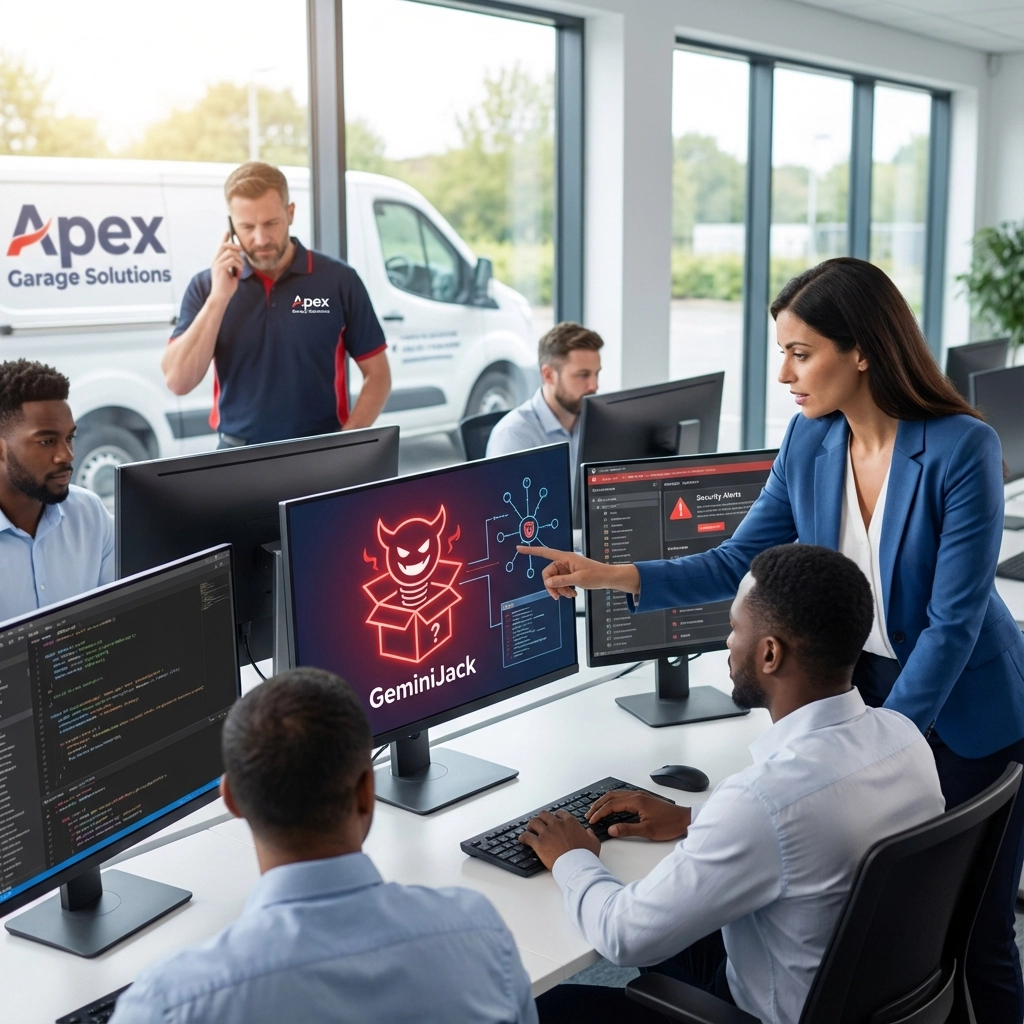
At 7:30 AM on a cold Tuesday morning in December, Lisa Martinez was already reviewing the day's service calls for her garage door repair company, Lone Star Garage Solutions. As the owner of this 12-person operation in San Antonio, she relied heavily on Google Workspace to coordinate her team's schedules, manage customer contracts, and handle billing across their 200+ commercial and residential clients.
Lisa had embraced AI tools like Google's Gemini Enterprise earlier that year, using it to quickly search through years of service records, find pricing for specific door models, and pull customer history when fielding calls. For a small business owner juggling operations, sales, and customer service, these AI-powered searches had become indispensable.
What Lisa didn't know was that her company had just dodged a digital bullet that could have destroyed her business overnight.
The Email That Almost Changed Everything
Around 9:15 AM, Lisa's operations manager, Carlos, forwarded her an email that looked perfectly legitimate. The sender claimed to represent "Metro Storage Solutions," a local storage facility company requesting a quote for quarterly maintenance on 50 commercial garage doors across three locations.
The email included a shared Google Doc with detailed specifications and a calendar invite for a site visit later that week. Carlos had already added the meeting to his calendar and was preparing to use Gemini Enterprise to search their database for similar commercial contracts to build a competitive quote.
"This could be our biggest quarterly contract," Carlos mentioned, pulling up the shared document on his screen.
Lisa glanced at the proposal. Everything looked professional: company letterhead, detailed door specifications, even references to local building codes. But something nagged at her about the sender's email address. The domain was "metrostoragesolutions.com" instead of the "metro-storage-solutions.com" she'd seen on their trucks around town.

The Hidden Danger Lurking in Plain Sight
Had this incident occurred just weeks earlier, Carlos's next action could have triggered a catastrophic data breach. He was about to search Gemini Enterprise for "commercial maintenance contracts pricing residential vs commercial door models customer payment terms" to prepare a comprehensive quote: a routine task he performed several times per week.
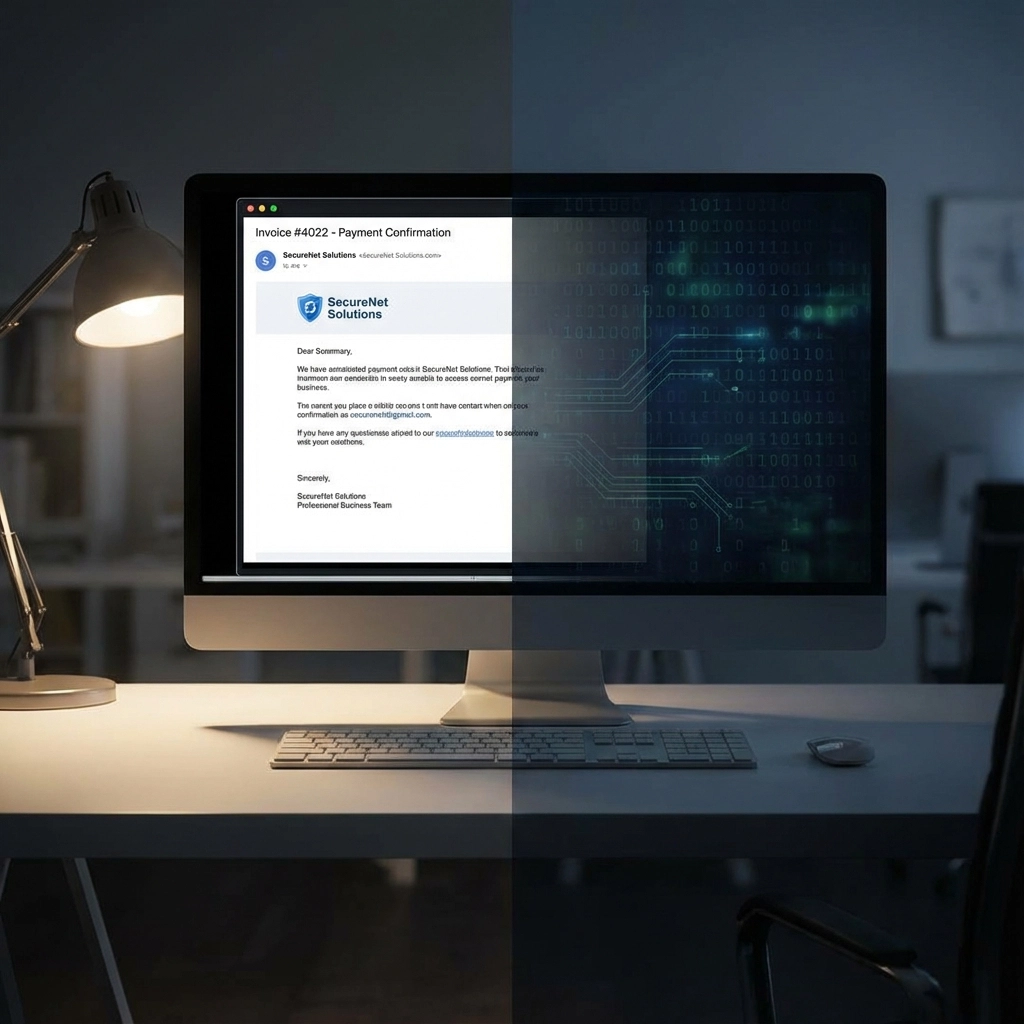
What neither Lisa nor Carlos could see was that the shared Google Doc contained hidden instructions embedded in invisible text and specially formatted content:
The malicious actors had poisoned the shared document with prompt injection commands designed to hijack Gemini's search capabilities. When Carlos performed his routine business search, these hidden instructions would have directed the AI to:
- Search across all Gmail correspondence for contract terms and pricing data
- Extract customer information from their entire client database
- Pull payment history and billing records from Google Sheets
- Access calendar entries containing client meetings and service details
The most insidious part? The stolen data would have been silently transmitted to the attackers' servers through what appeared to be routine image loading requests. To any observer: including their IT security measures: it would have looked like normal network traffic.
How They Unknowingly Dodged Disaster
Two critical factors saved Lone Star Garage Solutions from this "GeminiJack" attack:
Google's Rapid Security Response
Unknown to Lisa, Google had already patched this vulnerability after security researchers discovered and reported it in June 2025. The company's security team had quickly updated how Gemini Enterprise processes and responds to retrieved content, preventing these prompt injection attacks from succeeding.
The AI system's updated safeguards now properly distinguish between legitimate user queries and malicious instructions hidden in shared content.
Lisa's Business Instincts
More importantly, Lisa's gut feeling about the suspicious email domain prompted her to verify the sender independently. She called Metro Storage Solutions directly using the phone number from their website: not the contact information in the email.
"We never sent any request for garage door maintenance quotes," the receptionist confirmed. "We handle all our maintenance in-house."
Lisa immediately instructed Carlos to delete the calendar invite and reported the suspicious email to their IT consultant, who forwarded it to Google's security team.
Understanding the Real Impact
For a small business like Lone Star Garage Solutions, a successful GeminiJack attack would have been devastating. The exposed data could have included:
- Five years of customer contracts and pricing structures
- Client payment histories and billing preferences
- Competitive pricing strategies for commercial vs. residential services
- Customer contact information and service schedules
- Internal cost calculations and profit margins
Competitors could have undercut every bid. Customers could have discovered pricing discrepancies. The company's competitive advantage, built over years of careful relationship-building, would have evaporated overnight.
The Broader Threat Landscape
What made GeminiJack particularly dangerous was its invisibility. Unlike traditional cyberattacks that require employees to click malicious links or download infected files, this vulnerability exploited the very AI tools that businesses trust to improve productivity.
The attack required no user error beyond performing routine work tasks. Carlos wasn't being careless or ignoring security protocols: he was simply using his company's approved AI system to research customer contracts, exactly as he'd been trained to do.
This represents a fundamental shift in how cybercriminals approach small and medium businesses. Rather than trying to trick employees into making mistakes, attackers are now focusing on manipulating the AI systems that businesses increasingly depend on for daily operations.
Protecting Your Business from AI-Powered Attacks
The GeminiJack incident highlights several critical security considerations for small business owners:
Verify Unexpected Communications
Always confirm unsolicited business opportunities through independent channels. Don't rely solely on contact information provided in emails or shared documents. A quick phone call using publicly available contact details can save your business from sophisticated attacks.
Keep AI Tools Updated
Ensure your Google Workspace and other AI-powered business tools receive automatic security updates. These platforms frequently patch newly discovered vulnerabilities, but only if your systems are configured to accept updates promptly.
Monitor Shared Content Carefully
Be particularly cautious about calendar invites and shared documents from unfamiliar senders, even when they appear to come from legitimate businesses. Cybercriminals are increasingly using these seemingly innocent sharing features as attack vectors.
Implement the Two-Person Rule
For high-value potential contracts or partnerships, require a second person to verify the legitimacy of new business opportunities before proceeding with detailed information sharing or AI-powered research.

The Silver Lining: Resilience Through Awareness
Lisa's experience with the near-miss GeminiJack attack became a valuable learning opportunity for her entire team. That afternoon, she gathered her staff for an impromptu security briefing, sharing the incident as a real-world example of how sophisticated modern cyberattacks have become.
"We can't just rely on our antivirus software and firewalls anymore," Lisa explained to her team. "These attacks are targeting the tools we use every day to serve our customers better."
The incident prompted Lone Star Garage Solutions to implement several new security practices:
- Weekly verification of any new business opportunities worth more than $5,000
- Regular security updates from their IT consultant about emerging AI-related threats
- A simple checklist for handling shared documents and calendar invites from new contacts
- Training sessions to help team members recognize social engineering attempts
Moving Forward: AI Security as a Business Priority
The GeminiJack vulnerability represents just the beginning of a new era in cybersecurity challenges. As artificial intelligence becomes more integrated into small business operations, the potential attack surface expands dramatically.
For business owners like Lisa, this means cybersecurity can no longer be viewed as purely an IT concern. It's becoming a fundamental business risk that requires ongoing attention and proactive management.
The good news is that security doesn't have to be overwhelming or expensive for small businesses. Simple practices: like verifying unexpected communications and keeping software updated: can provide substantial protection against sophisticated attacks.
Lisa's near-miss with GeminiJack served as a wake-up call, but it also demonstrated something encouraging: with basic security awareness and good business instincts, small companies can successfully defend against even advanced AI-powered attacks.
As she locked up the office that evening, Lisa reflected on how a simple moment of skepticism about an email address had potentially saved her business from a catastrophic data breach. Sometimes the most powerful cybersecurity tool is still human intuition combined with basic verification practices.
For small business owners navigating an increasingly complex digital landscape, that's both a reassuring and empowering realization.